ServicesWater Softeners
Water Softeners in Cave Creek, Sized From a Hardness Test
Crusty faucets, spotted glasses and a water heater that ticks and rumbles usually point to hard water. We test your water first, size a softener to what we find and your household's use, then install it with the plumbing done right.
What a Softener Does and Who Needs One
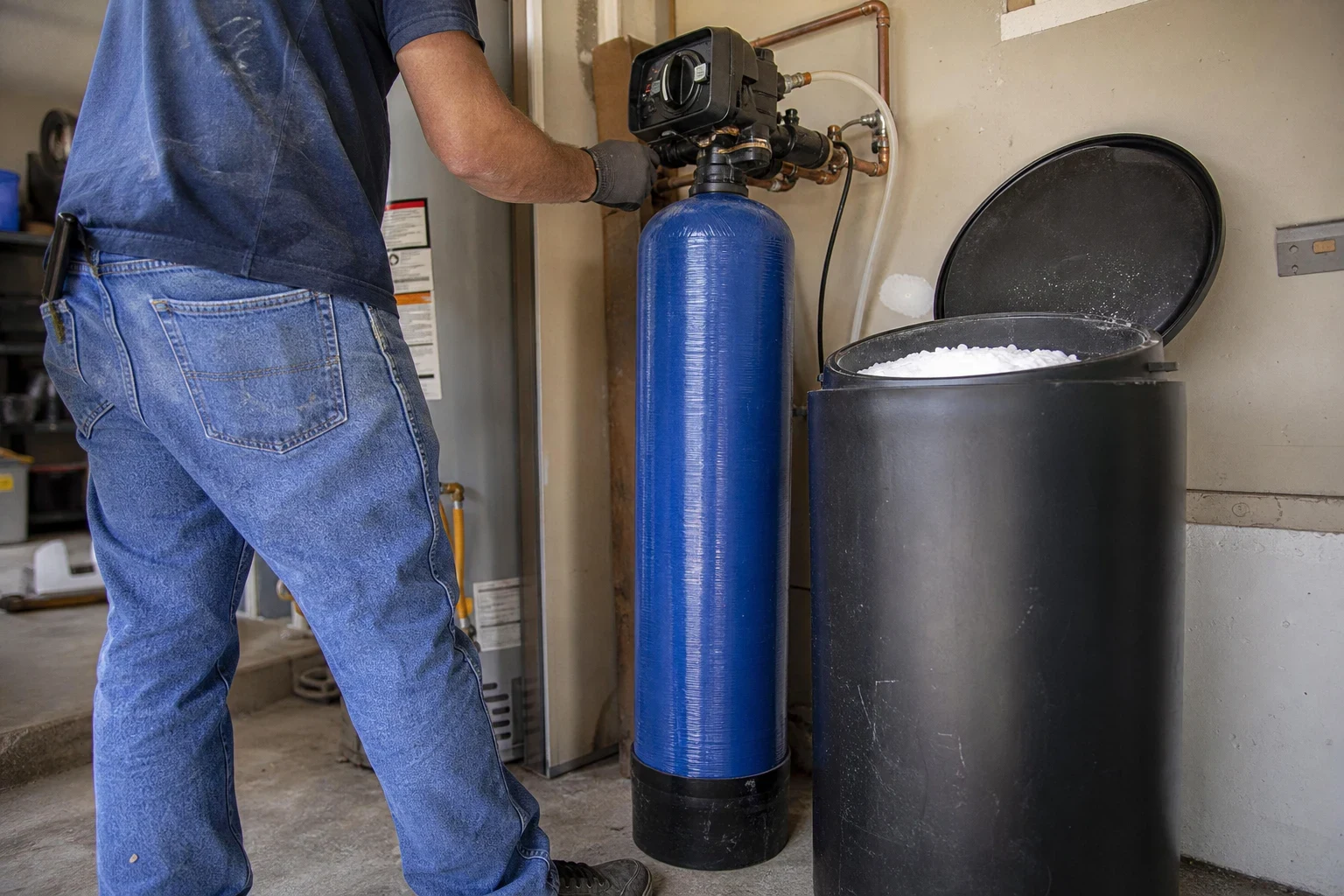
A softener pulls calcium and magnesium from your water before they can harden into scale. Its main tank is filled with tiny resin beads. As water flows past, the hardness minerals stick to the beads and a small amount of sodium, or potassium if you prefer, goes into the water in their place. Once the beads fill up, the unit flushes them with salty brine from a second tank and starts over. That flush is what regeneration means.
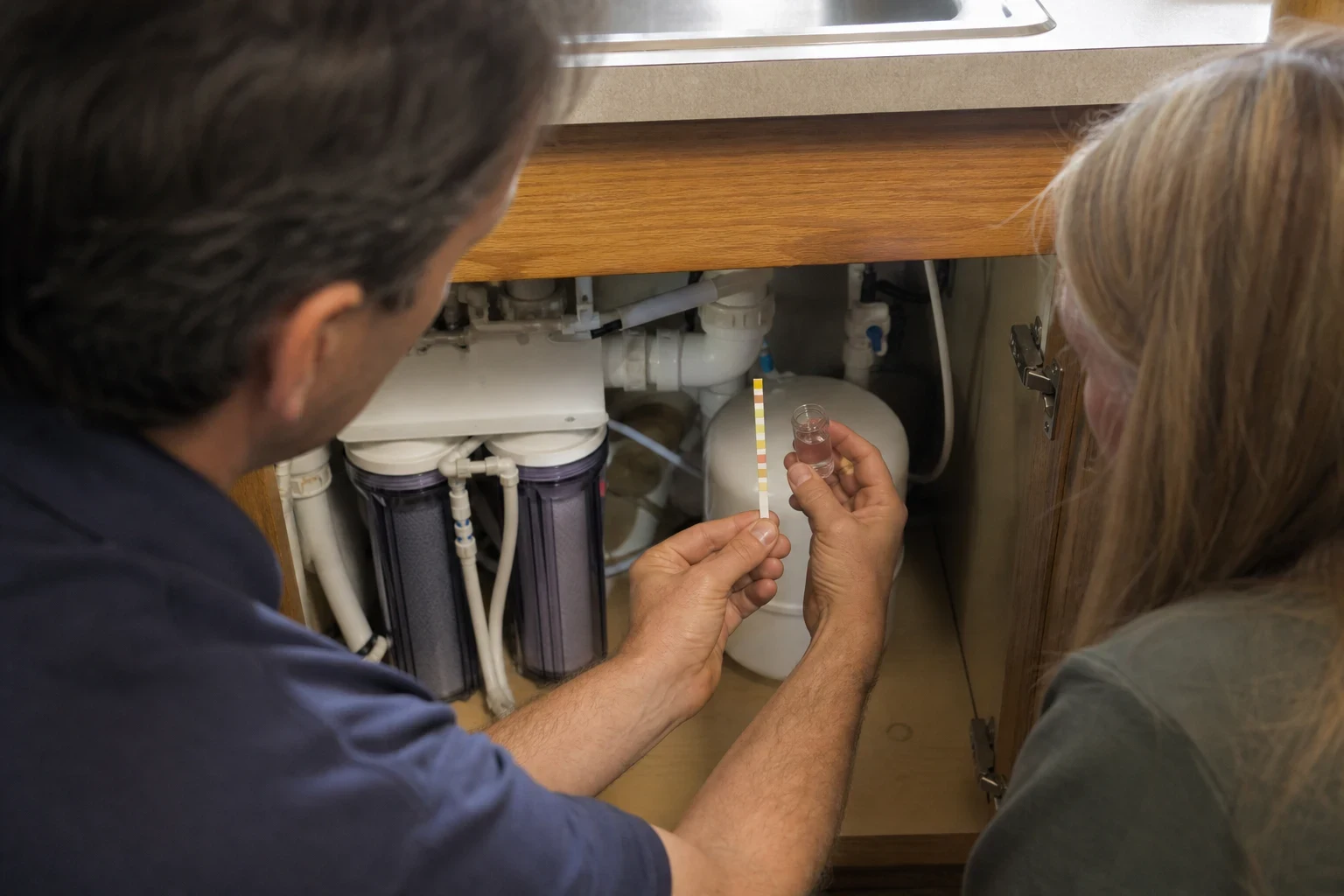
Plenty of Valley homes have hard water, but your own tap reading is what counts. So we begin with a free water test with zero obligation. When hardness comes back low, we will say a softener isn't worth buying and suggest a better fit, such as whole-home filtration for taste and odor.
If a softener is the answer, your water heater, fixtures and appliances collect less scale, and cleaning the shower and sink gets a lot easier.
What Comes With Your Softener Install
- 01
Sized to your household
We pick the grain capacity from your hardness reading and how many people live in the home. With the right size, the softener handles heavy days and doesn't waste salt on light ones.
- 02
Mineral tank, brine tank and control valve
Both tanks go on level ground, and the control head gets set to your hardness. A metered valve regenerates by how much water you actually use, which tends to use less salt than a basic timer.
- 03
Bypass valve
Turning the bypass routes water around the softener so your taps keep working. That makes service easy and means you never wait on the unit for water.
- 04
Air-gapped drain line
Each regeneration sends rinse water down a drain. We install that line with an air gap, so wastewater cannot siphon back into your water supply.
- 05
Installation included
Install comes with water treatment systems. The quote covers the equipment and the work to set it up, with no labor charge added later.
- 06
First run and a walkthrough
We add salt to the brine tank, run the first regeneration, look for leaks and show you how to refill salt and work the bypass.
Questions about Water Softeners?
Call(480) 712-9088When Hard Water Starts Showing Up at Home
Chalky rings around fixtures
The pale crust that forms on faucet tips and showerhead holes is mineral scale. Over time it plugs aerators and spray nozzles and lowers your water pressure.
Spots on dishes and shower glass
Hard water leaves a film that rinse aids and squeegees only partly hide.
Popping sounds from the water heater
Minerals drop out as sediment and pile up on the tank floor. Water caught beneath that layer flashes to steam and makes the crackling you hear, and the burner or element has to run longer to heat the same tank.
Soap that will not lather
Minerals fight soap and shampoo. You use more and still feel a residue on skin and hair.
An old softener that has stopped keeping up
If scale is coming back, the resin may be worn out, the valve may be failing or salt may have formed a hard bridge in the brine tank. We will tell you plainly whether a repair makes sense or replacement is the better buy.
How a Softener Install Goes
- 1
Your water test and what it means
A sample from your tap gives us your hardness number, and we put it in everyday terms. From there you hear honestly whether softening is worth the money and what capacity would suit your home.
- 2
Your installed price by phone
We walk you through the unit, the plumbing work and anything extra your setup needs. You know the full installed price before you agree to anything.
- 3
Install day
We shut off the water at the main, tie the softener into the line, set the bypass and run the drain line. Most of the work happens in the garage or wherever your main line enters, and we protect the floor around us.
- 4
Startup and cleanup
We restore water, run the first regeneration and check every joint for leaks. Then we clear out packaging and old parts and show you the basics of upkeep.
What Moves the Price of a Softener
Softener pricing depends more on your home than on the box. Two houses with the same unit can land at different totals because of the plumbing. We explain each piece when we give you your installed price by phone.
- Grain capacity
- Harder water and bigger households need more capacity. A larger resin tank costs more but regenerates less often.
- Existing softener loop or not
- Many homes already have a loop plumbed near the garage or main line. If yours does not, we need to cut into the main and add one, which adds time and materials.
- Valve type
- Metered valves cost a little more than timer valves and usually pay that back in salt and water saved.
- Removing an old unit
- Hauling out an old softener and adapting its connections to the new one is part of some jobs and not others.
- Add-ons
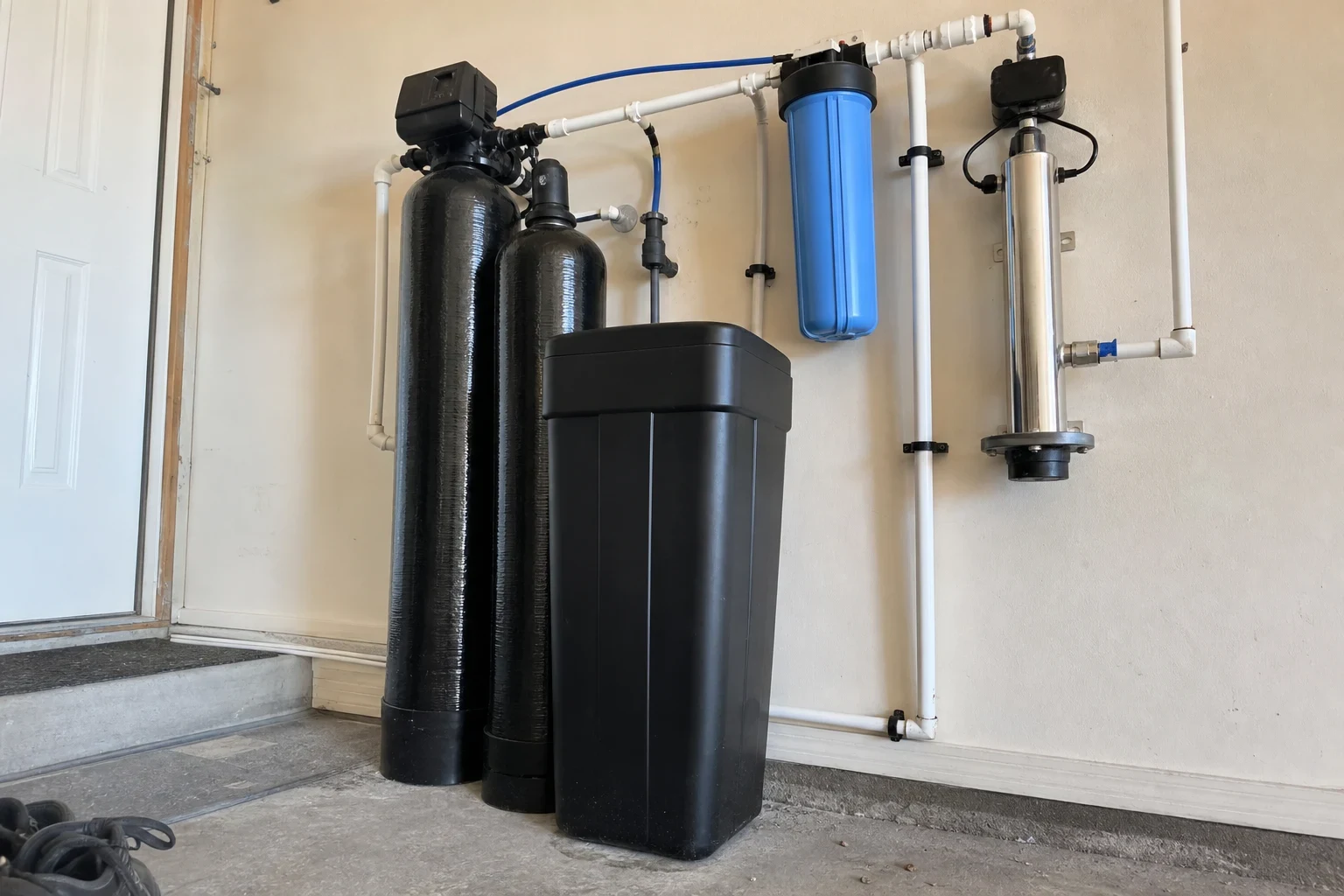
- Some homes pair a softener with a carbon filter for chlorine taste, or with reverse osmosis at the kitchen sink. Each adds equipment and connections.
Common Softener Questions
Do I need a softener, or will a filter do?
They solve separate problems. A softener removes the minerals behind scale. A carbon filter handles taste and smell, like chlorine, but does nothing to stop scale. The water test tells you which one you are dealing with.
Is softened water safe to drink?
For most households it is. Softening puts a small amount of sodium in the water, and harder starting water means a bit more. If you watch your sodium, reverse osmosis under the kitchen sink removes most of it from the water you drink and cook with.
How much care does a softener take?
Mostly you just keep the brine tank stocked with salt. Bigger families with harder water go through more bags, and at startup we hand you a refill schedule that fits your home. Now and then, look for a hard crust of salt in the tank and break it apart so brine keeps forming.
Can you use the softener loop my home already has?
Usually. We check the loop and its fittings first, and when they are in good shape, tying into it keeps the work simpler and the cost lower.
Is the water shut off for the whole install?
No. It stays off only while we cut into the main line and connect the softener. Once the joints are made, the water goes back on and we look for leaks. After that, the bypass lets the unit be serviced without cutting off your taps.
What about salt-free systems?
A salt-free conditioner changes the way minerals behave instead of removing them, so it deals with scale differently from a true softener. With your hardness reading in hand, we can walk through the tradeoffs together.
See Whether Softening Pays Off in Your Home
A free water test with zero obligation gives us your hardness number. If a softener makes sense, we size it and share the complete installed price before anyone picks up a wrench.