ServicesWhole-Home Filtration
Whole-Home Filtration in Cave Creek: What It Fixes and What It Costs
A whole-home filter treats every drop that enters your home, so the kitchen tap, the shower and the laundry all get the same cleaner water. We test first, tell you plainly what a filter will and won't change, and give you an installed price.
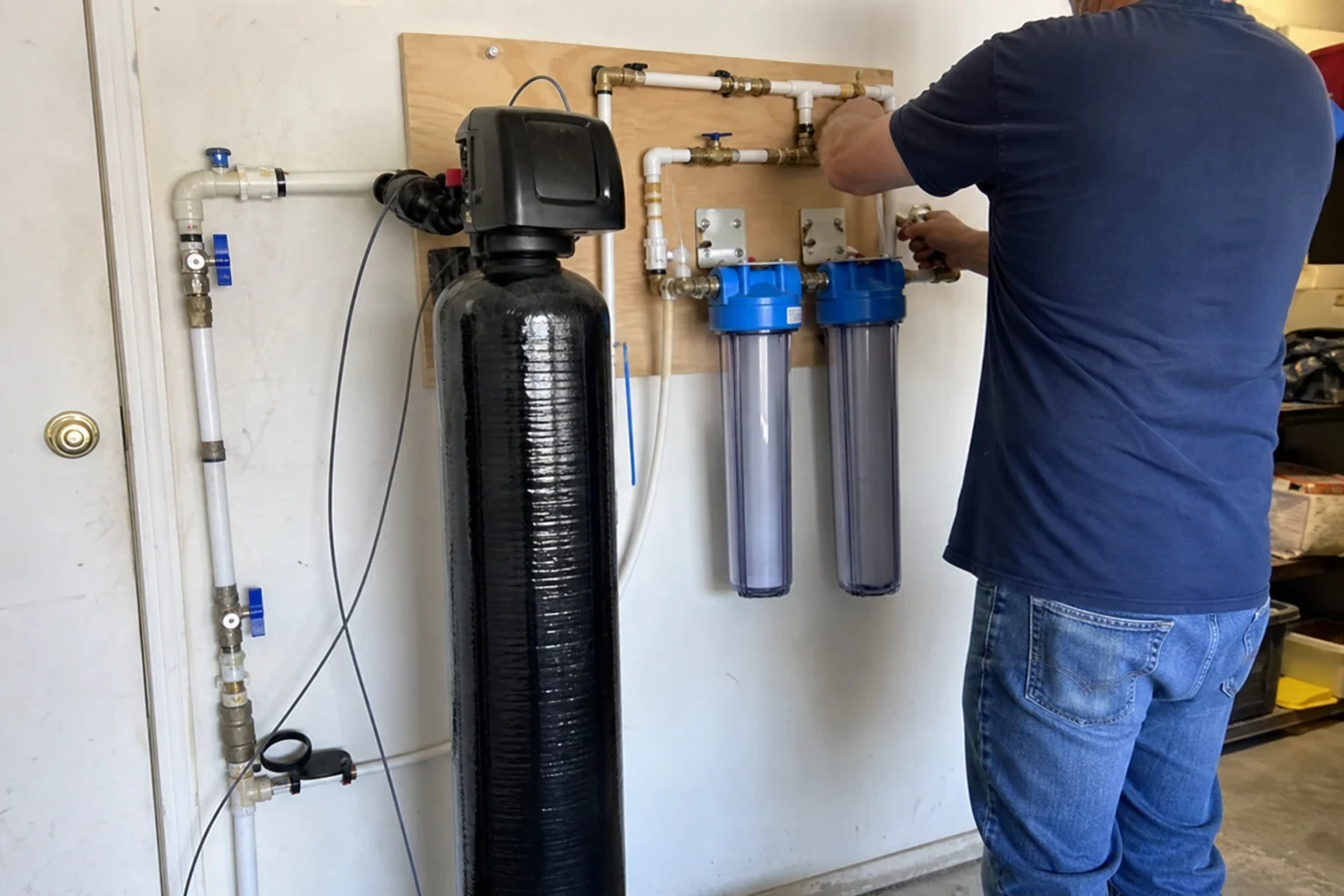
What a Whole-Home Filter Actually Does
A whole-home filter, also called a point-of-entry system, sits on your main water line right after it comes into the house. Water passes through a sediment stage and then a tank or housing of carbon before it reaches any faucet. The carbon grabs chlorine and chloramine, the disinfectants city water is treated with, along with the taste and smell they leave behind.
Here is the straight answer on its limits. Carbon does not remove the calcium and magnesium that make water hard, so it won't stop spots on glass or scale on fixtures. That is a job for water softeners, and many homes pair the two. A whole-home filter also isn't the tightest treatment for drinking water. If you want the most from your kitchen glass, reverse osmosis under the sink does that part better.
So when is it the right call? When the chlorine smell in the shower bothers you, when everyone in the house notices the taste, or when you're tired of changing pitcher filters and want the whole house covered at once.
What Comes With a Whole-Home Filter
- 01
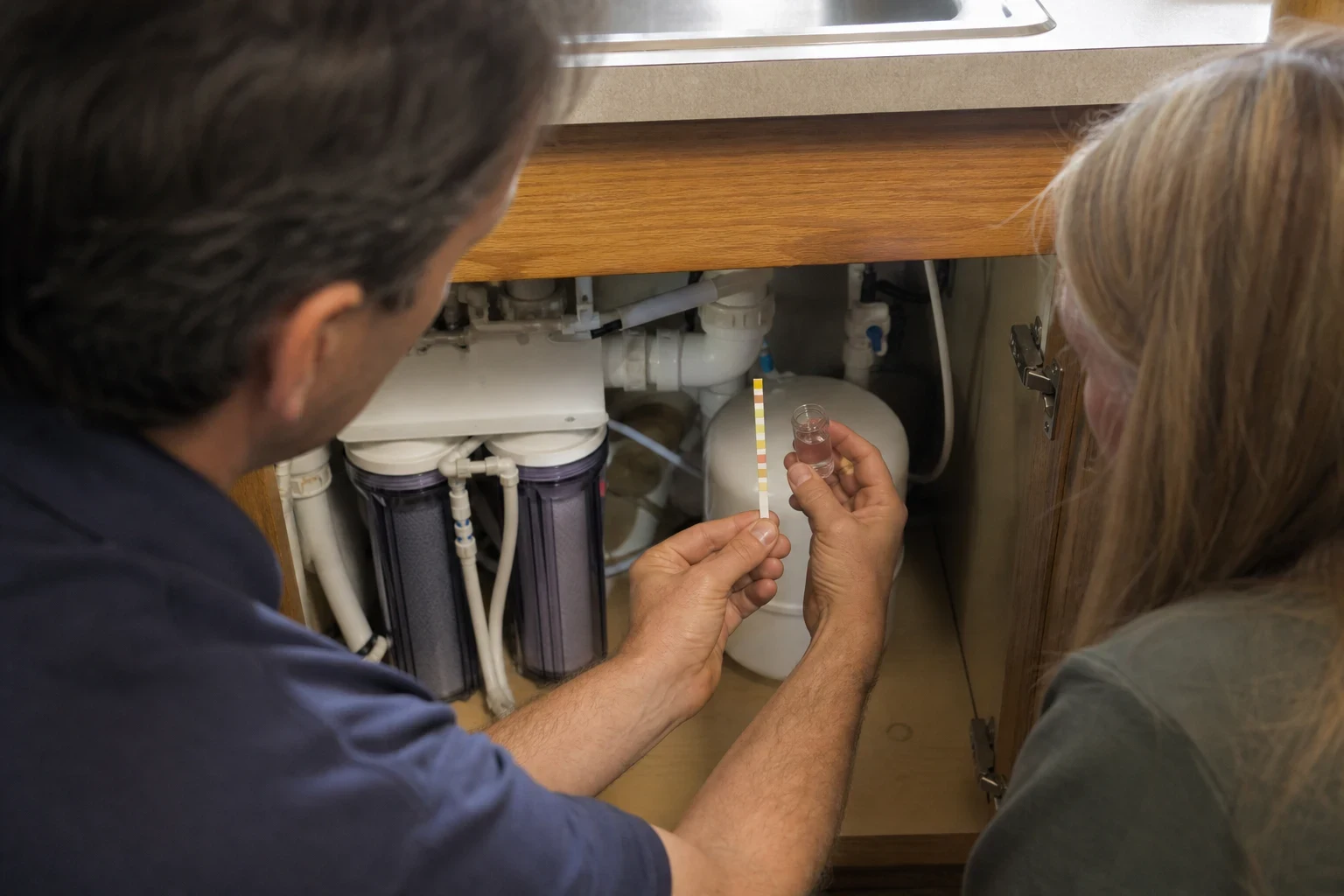
A free water test first
Before we suggest a system, we read your water so the setup fits what is really in it. That test costs nothing and carries zero obligation.
- 02
Sediment prefilter
An early stage traps sand and fine particles ahead of the carbon. The main media stays clear longer and keeps working the way it should.
- 03
Carbon system sized to your home
Tank or housing size follows your bathroom count and your peak water hours. Go too small and pressure drops when a shower and the dishwasher run at once.
- 04
Bypass valve
Flip the bypass and water skips the filter, handy for service days or running the yard hose. Your taps keep flowing while media gets swapped.
- 05
Installation included
Water treatment systems come with install, so the quoted price covers both the unit and the labor. The installer connects to your main line, rinses the fresh media and checks each joint for drips.
- 06
A walkthrough before we leave
You see where the system sits, how to use the bypass and what routine care involves. We tidy the work area before heading out.
Questions about Whole-Home Filtration?
Call(480) 712-9088Signs a Whole-Home Filter Makes Sense
Your shower smells like a pool
Hot water releases chlorine into the air, so the smell is strongest in a closed bathroom. A point-of-entry filter takes it out before it reaches the showerhead.
Tap water tastes off
A flat, bleach-like taste is usually the disinfectant. It's not a sign your water is unsafe, but it's a common reason families stop drinking from the tap.
You're buying a lot of filters
Pitcher cartridges, fridge filters and shower filters add up and only cover one spot. One system on the main line covers all of them.
Grit in faucet screens
Small particles in aerators or appliance inlet screens point to sediment. A prefilter stage catches it upstream.
You already have a softener
A softener handles hardness but does little for chlorine taste. Adding carbon ahead of it rounds out the setup and can help protect the softener resin.
From First Call to Finished Install
- 1
Talk it through and test
Describe what you dislike about your water and we schedule the free test. It covers disinfectant levels, hardness and anything else that shapes the choice.
- 2
A plain recommendation and price
You hear which system suits your home, why, and what it will not solve. The installed price comes by phone, and you can take your time deciding.
- 3
Install day
The house goes without water for part of the visit. The installer opens the main line where it comes in, usually in the garage or by the main shutoff, and mounts the bypass, prefilter and carbon unit.
- 4
Flush, check and walk through
Fresh carbon gets rinsed until the water comes out clear, and each fitting is tested under pressure. We walk you through the bypass and servicing, then clean up.
What Sets Your Price
Two things drive most of the cost: how large a system your home calls for and how easy your main line is to get to. We spell out each item in the quote so nothing pops up later. Water treatment systems come with install.
- System type
- Cartridge systems cost less up front, but their filters need changing more often. Tank systems hold more carbon and run longer between service visits.
- How much water your home uses
- A busy four-bath home needs more carbon than a two-bath home with two people in it. A larger unit keeps strong flow at every tap, and a lighter-use home can spend less on a smaller one.
- Plumbing access
- Plenty of homes have a loop at the main line ready for treatment equipment, which makes the work simple. If yours does not, extra piping is involved.
- Carbon type
- Treating chloramine calls for catalytic carbon, which is priced above standard carbon. The water test shows which kind your home needs.
- Pairing with other systems
- Putting in a softener or an under-sink reverse osmosis unit during the same visit shifts the total. Each item is priced on its own so you can see what it adds.
Questions About Whole-Home Filters
Will a whole-home filter soften my water?
No. Carbon takes out chlorine, odor and off tastes, but hardness minerals flow straight through it. For spots and scale you want a softener, and it pairs well with a filter.
Will it lower my water pressure?
Not when it is the right size. Pressure loss after an install usually comes from a filter undersized for the bathroom count or a sediment cartridge that is overdue for a change. We size to your household's water use and let you know when the prefilter needs swapping.
Do I still need reverse osmosis for drinking water?
Not necessarily. Lots of households like the taste of carbon-filtered water just fine. For the most complete treatment of drinking and cooking water, an under-sink reverse osmosis unit covers one faucet.
How often does the filter need service?
The prefilter cartridge gets changed most often, and the swap takes a few minutes. The main carbon lasts far longer, based on system size and household water use. We give you a timeline for your own setup.
Can the system go in my garage?
Yes, and most end up there because the main line usually comes in through the garage. We keep the unit out of direct sun, which counts during a Cave Creek summer, and leave space to service it.
Is there a catch with the water test?
None. The water test is free with zero obligation. We explain your results in everyday terms, and what you do afterward is completely up to you.
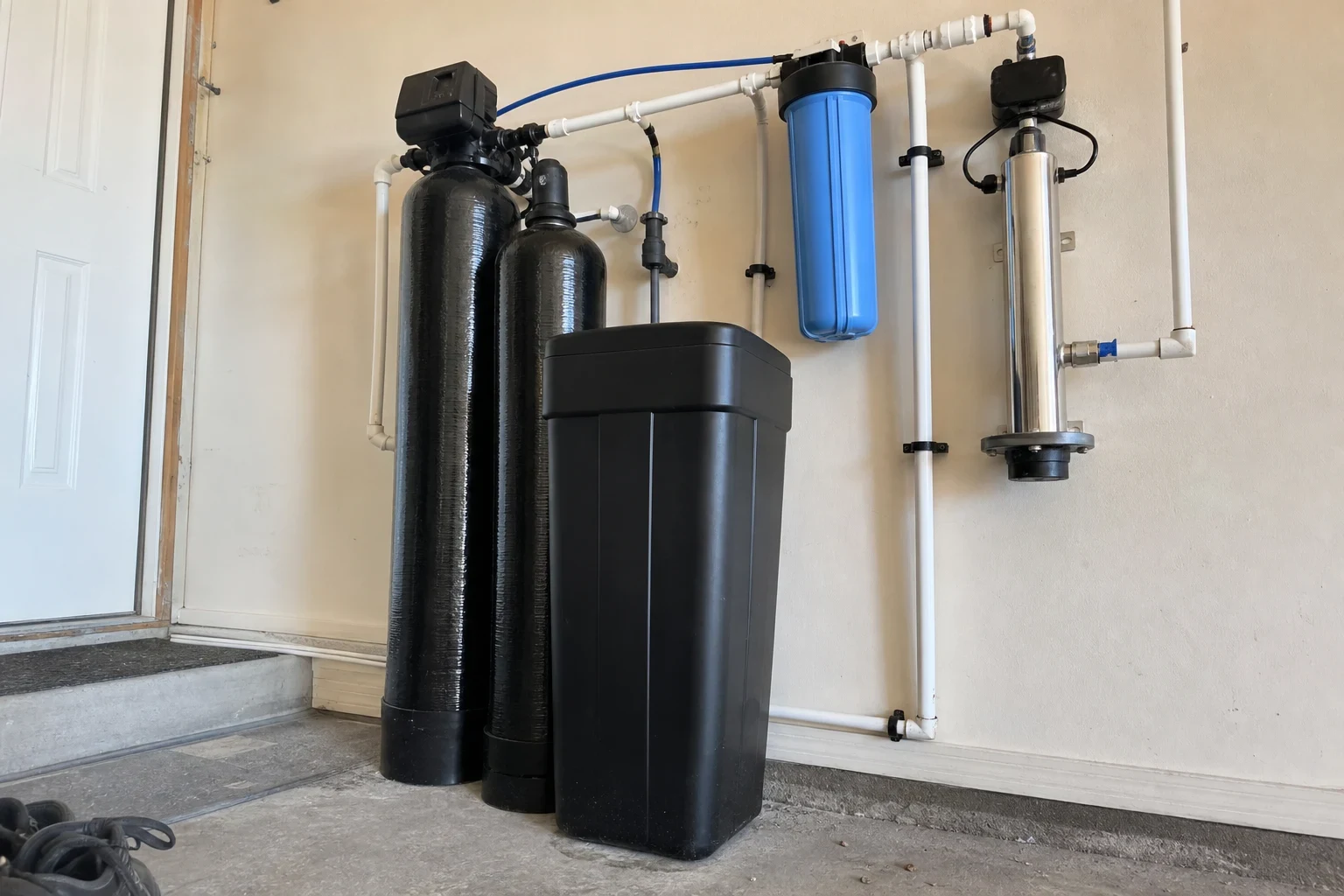
Find Out What Your Home Needs
Start with a free water test and a clear answer on whether a whole-home filter will fix what's bothering you. If it fits, you'll get the installed price by phone.