ServicesWater Testing
Water Testing in Cave Creek, Explained Reading by Reading
Spots on glasses, a crusty showerhead or water that just tastes off all have a cause. We test your water at your kitchen sink, show you each number and tell you plainly what it means. The test is free, and a system is never a requirement.
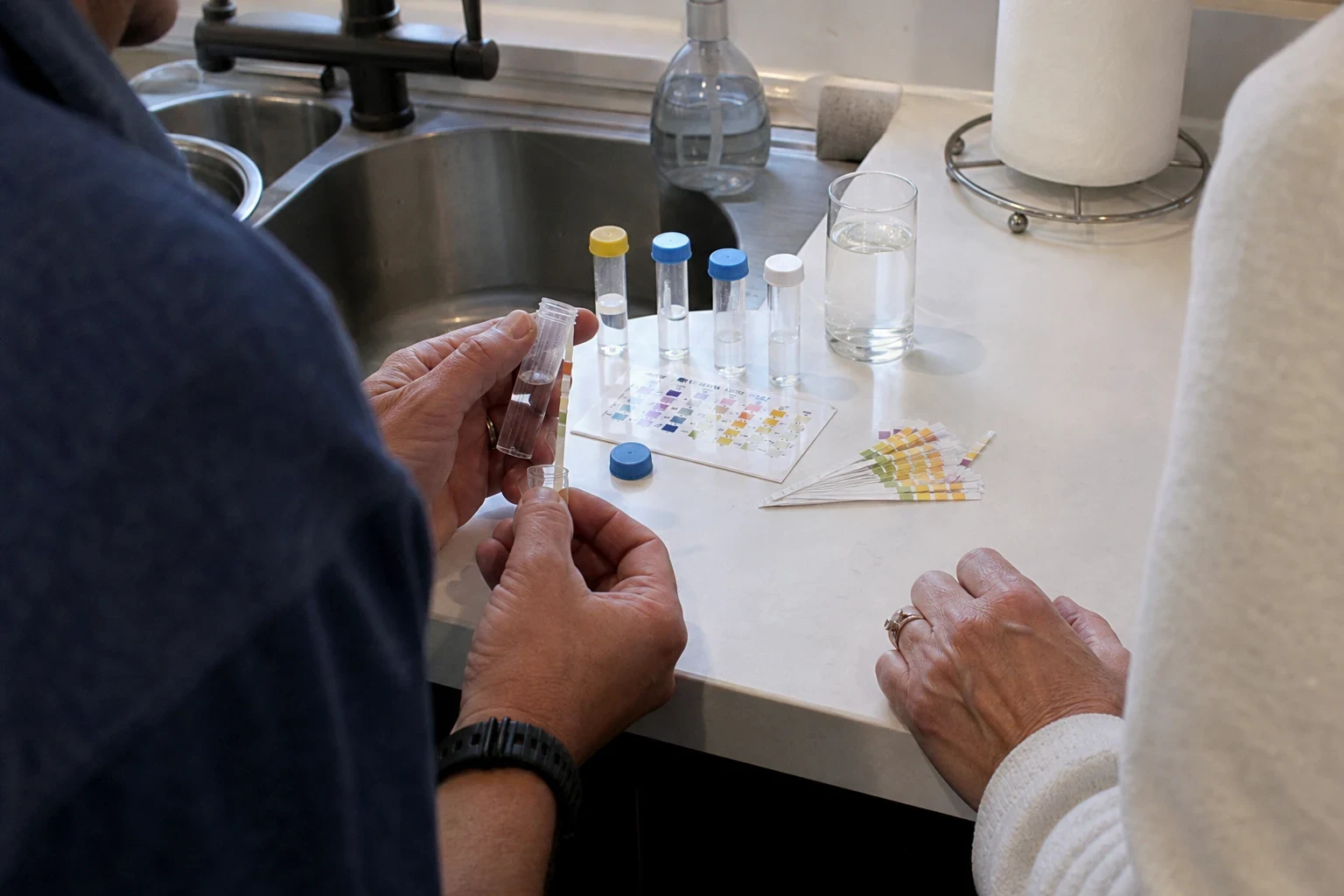
What Your Test Results Show
Testing swaps a general complaint for real numbers you can use. Hardness measures your calcium and magnesium, the minerals that coat fixtures white and build scale inside water heaters. Total dissolved solids shows the full mix of what is in the water. Chlorine and pH account for most taste and odor problems.
Around Phoenix, hard water is the norm, yet the degree changes from house to house. So we test before recommending anything. The fix might be a softener, reverse osmosis under the kitchen sink or whole-home filtration, or your water may need nothing at all. Either way, we tell you.
The test is free and carries zero obligation. You get your numbers and our honest take on them, buy or not.
What Your Test Covers
Hardness
We read your calcium and magnesium levels and report them in grains per gallon. That figure tells us whether a softener is worth it and what size it should be.
Total dissolved solids
The TDS figure reflects the total mineral content. When it runs high, it often accounts for a salty or flat flavor in your drinking water.
Chlorine
Water utilities use chlorine to keep water safe in the pipes. We measure what arrives at your faucet, because it is the common cause of a pool smell.
pH
Water that tips too far toward acidic or alkaline changes the taste and how fixtures hold up. We record where your reading lands.
A walk through your plumbing
We check the spot where water comes into the house, the water heater and any system already installed. That shows what could fit and how well current equipment is working.
Your readings, explained
We sit down with you and review each reading. When a question needs a lab instead of a home test, we tell you and explain how mailing a sample works.
When a Water Test Is Worth Doing
- White crust on faucets and showerheads
- Mineral buildup is a sign of hard water. Testing shows how hard it is, so equipment sizing is not a guess.
- Spotty dishes and stiff laundry
- Glasses show leftover minerals first once they dry. Scratchy towels out of the wash are another hint.
- A chlorine or chemical smell
- When tap water has a pool smell, a chlorine reading confirms the cause and points to carbon filtration.
- Your current system seems to have quit
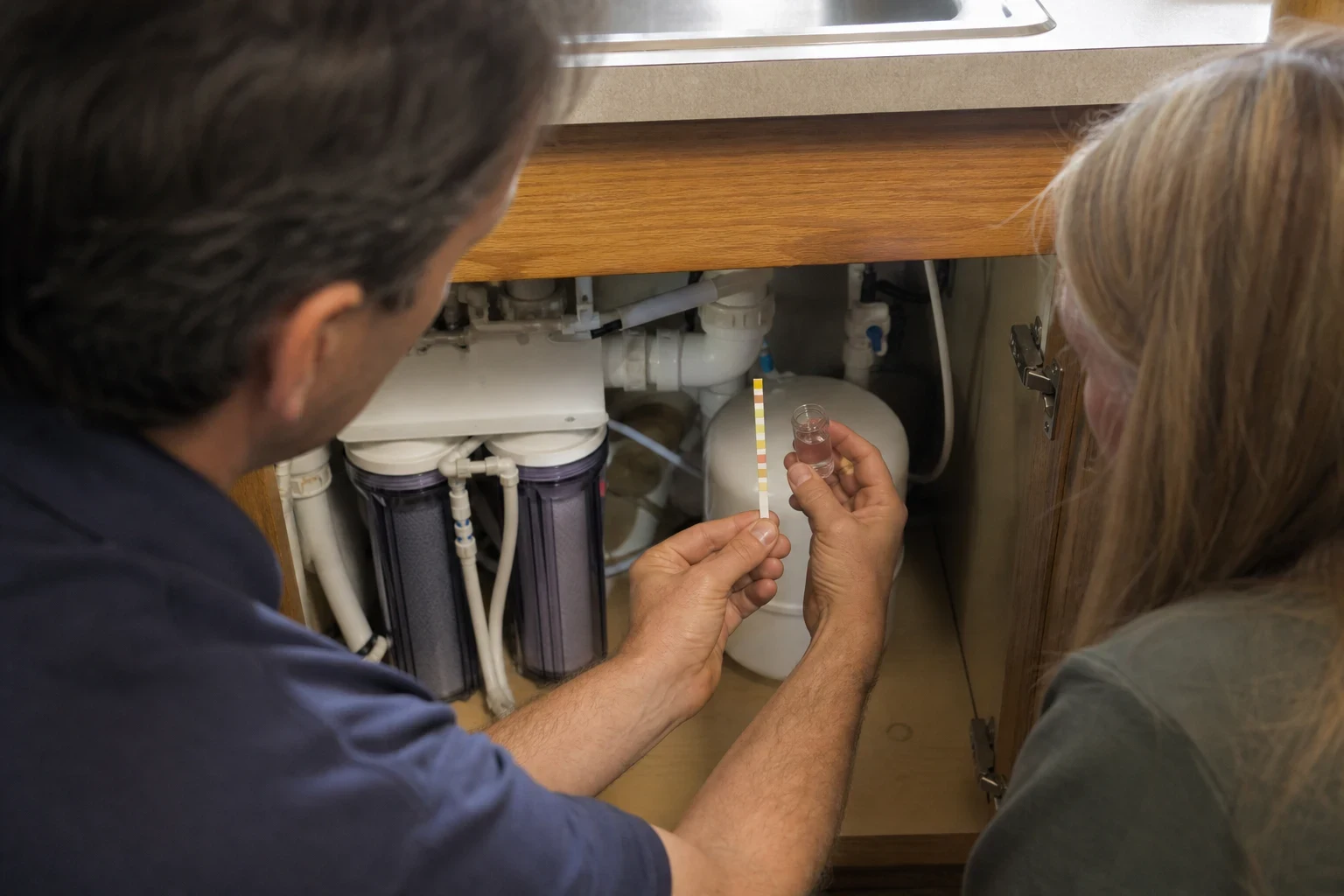
- Aging softeners and filters can fail quietly. Testing the water downstream shows whether yours is still working.
- You just moved in
- A new house comes with someone else's plumbing and possibly their equipment. A first test gives you a starting point.
How Your Free Water Test Goes
- 1
A short phone call
Tell us what you are noticing and pick a time that works for you. We ask a few questions about your home and any equipment already in place.
- 2
We test at your tap
We draw a sample at the kitchen sink and run the readings right there, usually in a few minutes. You can watch every step.
- 3
A look at your setup
We check your main water line, water heater and the spot where a system could go, so any suggestion fits your home.
- 4
Straight answers on the results
We explain what each number means and what, if anything, is worth doing. If nothing is needed, that is what we tell you.
The Test Is Free; Here Is What Shapes a System Price
Your in-home test costs nothing and carries zero obligation. When the readings call for a system, you get installed pricing by phone or in person, and water treatment systems come with install. These items shape that price.
- What the readings show
- Very hard water calls for a bigger softener than slightly hard water. A taste problem by itself might need only a carbon filter.
- Whole-home or one faucet
- Covering every faucet in the house takes more equipment than one reverse osmosis unit below the kitchen sink.
- Household size and water use
- A bigger household with more bathrooms draws more water at once, and that changes how a system gets sized.
- Where the system goes
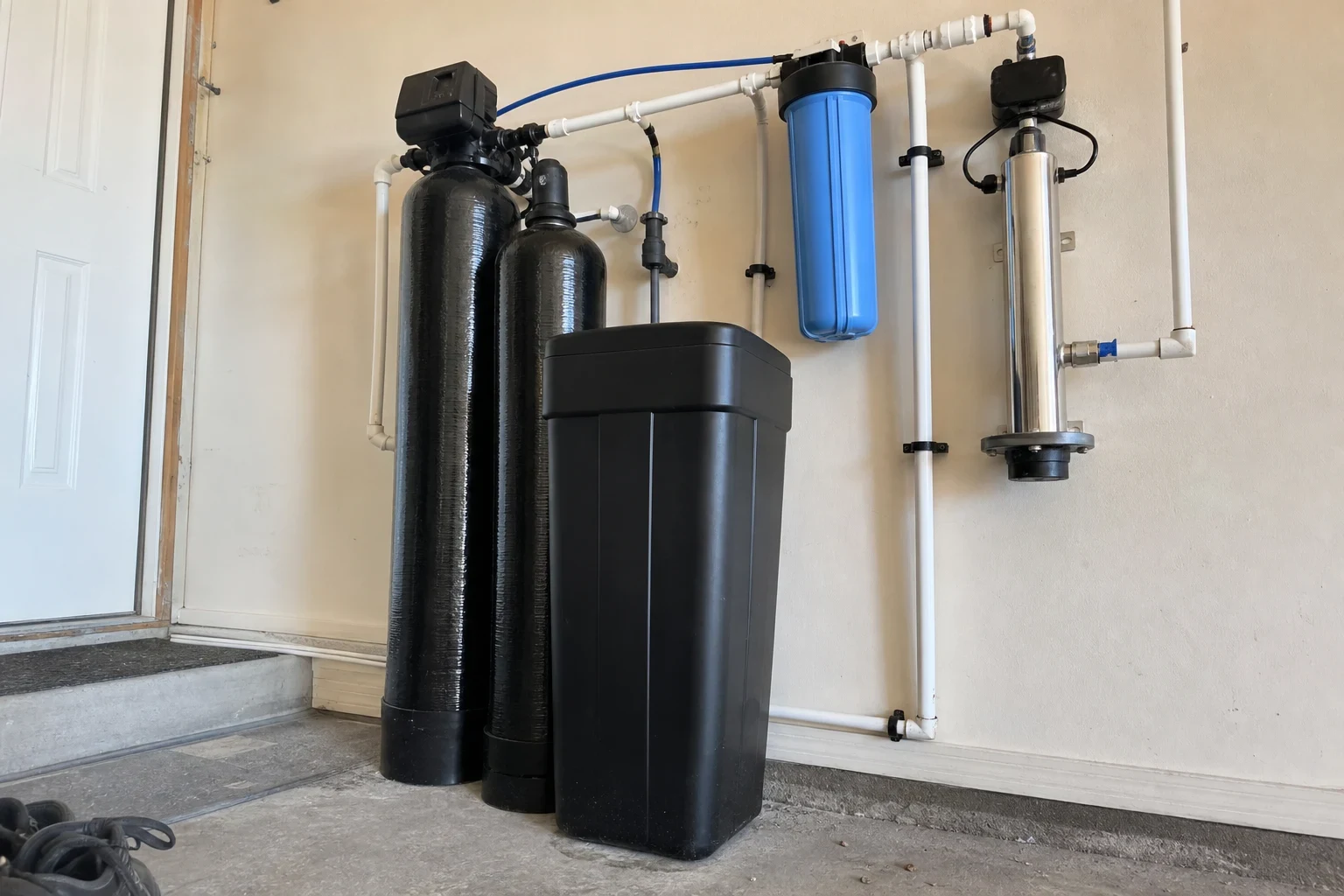
- Open space by the main line in the garage keeps things simple. A spot that needs added piping or a new drain hookup takes more work.
Questions About the Water Test
- Is the water test really free?
- Yes. There is no charge and zero obligation. You get your numbers and our honest view, and the next step is your call.
- Will you try to sell me a system during the test?
- We tell you what the readings support, even when that means no system at all. If something would help, we lay out the choices and what they cost. You never have to decide on the spot.
- How long does the test take?
- A typical visit takes less than an hour, counting the plumbing check and reviewing results with you. The readings themselves need just a few minutes.
- Can a home test check for lead or other trace contaminants?
- The in-home test reads hardness, dissolved solids, chlorine and pH. Lead and other trace contaminants require a lab sample, because a quick sink-side kit cannot measure them dependably. We can walk you through that process and what reverse osmosis can do if a result worries you.
- I already have a softener. Is a test still worth it?
- Usually, yes. Checking the water leaving your softener shows whether it still pulls out hardness or needs service. Sometimes a settings change is all it takes, which saves replacing the unit.
Find Out What Is in Your Water
One phone call sets up your free test. We bring the readings, you get plain answers, and any next step is up to you.